
 All services

If you still have a lawn in Henderson or Las Vegas, the Southern Nevada Water Authority will pay you to take it out. The Water Smart Landscapes rebate has paid new single-family applicants $5 a square foot since September 18, 2025, and Henderson and the Las Vegas Valley Water District each add money on top. The conditions matter, starting with the first: the grass has to stay in until SNWA has seen it. Amounts and rules below stood as of November 2026.
Why the valley is pulling out grass
SNWA calls outdoor landscape watering the biggest use of the community's water supply at a time when Lake Mead is in shortage, and its pages put the outdoor share at about 60 percent of Southern Nevada's water. SNWA counts a saving of 55 gallons for every square foot of grass converted to drip-watered desert landscape. Since the program began in 1999, it says, the valley has converted 250 million square feet of lawn and saved 203 billion gallons of water.
What the rebate pays
As of November 2026:
- SNWA: $5 per square foot for the first 10,000 square feet of grass converted on a single-family home, then $2.50 per square foot, per property per fiscal year (July 1 to June 30).
- Las Vegas Valley Water District customers: an extra $2 per square foot, for $7 up to 10,000 square feet and $4.50 after that. LVVWD says customers who applied before September 18, 2025 and still have their grass must reapply for the higher rate.
- City of Henderson customers: a flat $575 on top of SNWA's rebate, plus $50 for each new qualifying tree. You apply to SNWA first. Henderson's supplement is for single-family parcels inside city limits converting at least 400 square feet of functional grass in a single phase, one conversion per calendar year.
- Trees: SNWA's Tree Enhancement Program adds $100 for each new qualifying tree, up to 100 percent canopy coverage, with existing trees counted first. It pays out with the main rebate.
SNWA says that for most participants the rebate covers about half the cost of a good quality conversion. It also warns that rebates may count as taxable income, and Henderson notes that customers may receive a 1099.
What the new yard has to include
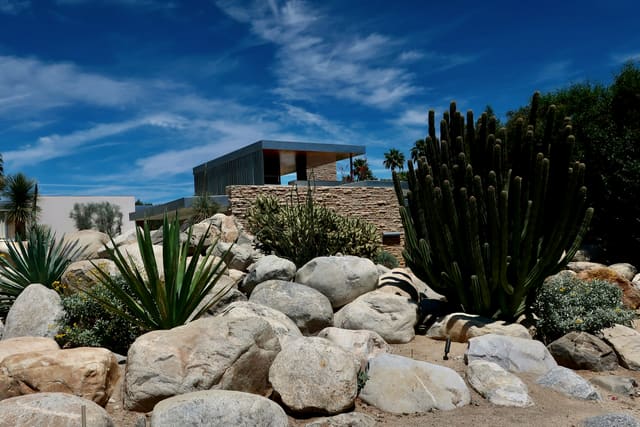
The rebate pays for a working desert landscape. SNWA's residential conditions require:
- A living lawn to start with. The area has to be live, maintained grass, at least 400 square feet, watered by an SNWA member agency or a valley well. If the lawn has died, it doesn't count.
- Plants covering half the area. At least 50 percent living plant cover at maturity, counted from the mature sizes on the Regional Plant List. SNWA's worksheet adds up each plant's listed coverage and divides it by the converted square footage.
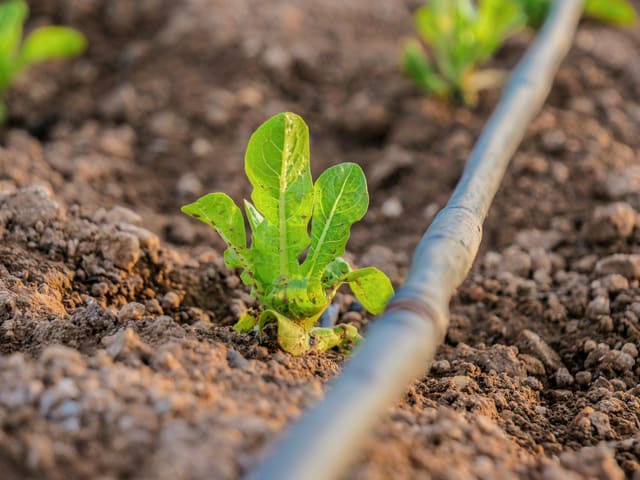
- Drip with the right parts. If the area is watered, it has to be drip with a filter, a pressure regulator and emitters rated at 20 gallons per hour or less. Sprinklers left on any remaining lawn may not spray the new area.
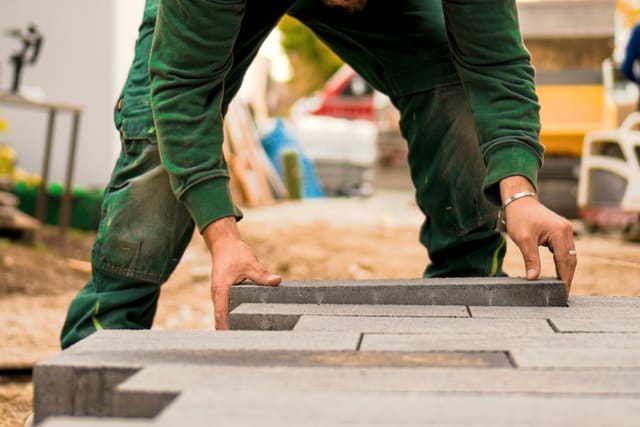
- A permeable surface. Rock, bark, ungrouted pavers, permeable artificial turf or living groundcover. Plastic and concrete aren't allowed, and a weed barrier has to be fabric or mesh. A sand-set brick or flagstone path can count; a concrete patio is subtracted from the area.
Swapping one grass for a lower-water grass doesn't qualify. Artificial turf can stand in for rock, but it doesn't change the 50 percent plant rule, so a yard of wall-to-wall turf won't earn the rebate. Our post on artificial turf in Las Vegas heat covers where turf fits.
The steps, in order
- Apply online with SNWA, then with Henderson if you're a Henderson customer.
- The pre-conversion visit. SNWA inspects the property, checks for live grass and an active irrigation system, and measures the area. Applications pile up in spring and fall, so expect longer waits for a visit then.
- Wait for approval. SNWA's terms say not to remove the lawn until it has inspected and authorized you to proceed.
- Build it within 12 months. SNWA may extend that by up to 90 days.
- Final inspection. SNWA inspects, in most cases within 10 business days of hearing that you're done. If something fails, you get 60 days or the rest of the 12 months, whichever is longer, to correct it.
- The easement. The rebate depends on a conservation easement, signed within 18 months, that limits the converted area for good: no irrigated grass, no spray irrigation. Selling the house before the easement is recorded forfeits the rebate, and leaving the program later means paying the rebate back with administrative fees.
- Payment. SNWA mails the check after the easement is recorded.
The laws behind it
The rebate sits on top of a set of rules that already restrict grass, as of November 2026.
- AB 356 (2021), amended by AB 220 (2023). From January 1, 2027, Colorado River water can't be used to irrigate nonfunctional grass on property that isn't used exclusively as a single-family residence. AB 220 changed the test from how a parcel is zoned to how it is used. Your front and back yard are not covered. HOA streetscapes, business parks, medians and similar grass are, and Henderson's page tells those owners to remove it by December 31, 2026.
- A cap in a deep shortage. AB 220 lets the SNWA board limit each single-family home to 0.5 acre-feet of Colorado River water a year if the federal government cuts Nevada's allocation to 270,000 acre-feet or less.
- New homes. In December 2021 the SNWA board approved a ban on irrigated grass in new residential and commercial development, front and back yards included. Henderson has prohibited lawn on new development since September 19, 2022; LVVWD won't serve water for grass at properties that got their certificate of occupancy after April 5, 2022; North Las Vegas bars new grass in any single-family yard.
- Existing Henderson yards. On homes permitted before September 19, 2022, grass in the back and side yards may cover no more than 50 percent of that area, and new grass can't bring the lot past 2,500 square feet in total. A front-yard lawn removed since 2004 can't come back.
Your HOA
Nevada law protects the conversion. Under NRS 116.330, an HOA can't prohibit drought-tolerant landscaping in a yard you use, front or back, and the statute's definition includes decorative rock and artificial turf. The association can require you to submit plans for architectural review and ask that the design fit the community's style, but it can't unreasonably deny or withhold approval. Henderson's code also bars private covenants that require lawn grass. Get the HOA's approval in writing before the lawn comes out.
Doing the conversion
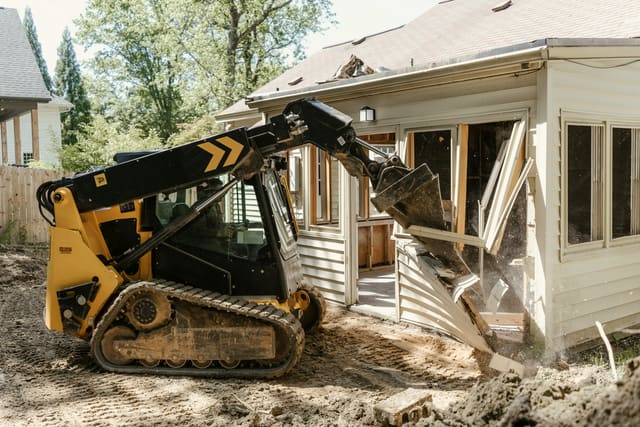
SNWA pays the same whether you do the work yourself or hire a contractor. A conversion touches several trades at once: removing the grass and sprinkler pipe, regrading, running drip, planting, rock and often turf or pavers. We do all of it as one contractor, from the demo to the last plant, and we lay it out with the 50 percent plant cover and the drip rules in mind. Estimates are free. See our pages on plants and planting and irrigation systems.
Sources
- Water Smart Landscapes rebate Southern Nevada Water Authority.
- Residential program conditions Southern Nevada Water Authority, rates as of September 18, 2025.
- Plant coverage worksheet and sample conservation easement Southern Nevada Water Authority.
- Tree Enhancement Program conditions Southern Nevada Water Authority.
- Understand laws and ordinances and change your irrigation clock Southern Nevada Water Authority.
- Rebates and Service Rules, Chapter 3 Las Vegas Valley Water District.
- Rebate programs and nonfunctional grass removal (AB 356) City of Henderson.
- Chapter 14.14 Conservation Henderson Municipal Code (Ord. 3905, 2022).
- Chapter 13.08 Water Conservation North Las Vegas Municipal Code (Ord. 3147, 2022).
- AB 356 (2021) and AB 220 (2023) Nevada Legislature.
- NRS 116.330: drought tolerant landscaping Nevada Legislature (2025 revision).
Rules change. Check the current requirements for your property before you build; nothing here is legal advice.


