
 All services

Why so many yards here end up with turf
In much of the valley a new real lawn is off the table. Henderson has banned lawn grass in the front yard of a detached house since January 1, 2004, unless grass was already there by the end of 2003. On any home whose building permit was issued on or after September 19, 2022, Henderson allows no lawn grass at all. The Las Vegas Valley Water District will not serve water used on grass at properties that received their certificate of occupancy after April 5, 2022, and North Las Vegas bars new grass in the front, side and back yard of a single-family home.
Those rules are written for living grass. If you want a green area where the kids play or the dog runs, artificial turf is the way to get one. As of November 2026, a homeowner with older grass in the back can still keep it, within limits we cover on our sod page.
What goes under the turf
Turf is only as flat as the ground under it. Clay, sand and hard caliche make up most of the soil in the valley, according to the Southern Nevada Water Authority, so drainage gets as much attention as looks. On a typical job we:
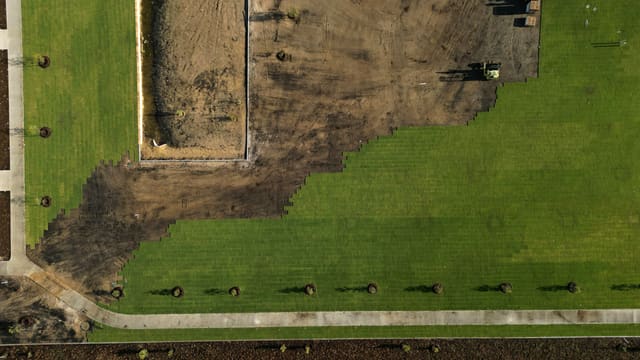
- take out the old lawn, rock or weeds and grade the yard so water moves away from the house and off the turf;
- spread and compact a crushed-rock base so the surface won't dip where people walk;
- fix the edges tight along walls, beds and pavers, glue the seams flat, then spread infill and brush the blades up;
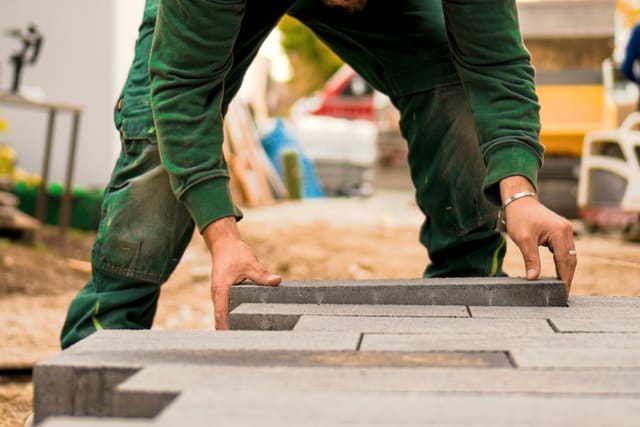
- set stepping stones or pavers where a path crosses the turf, so it wears where you expect it to.
Before any trench or grading, Nevada law requires a call to 811 at least 2 working days and no more than 28 calendar days ahead, with the dig area marked in white. A contractor has to call even when digging by hand.
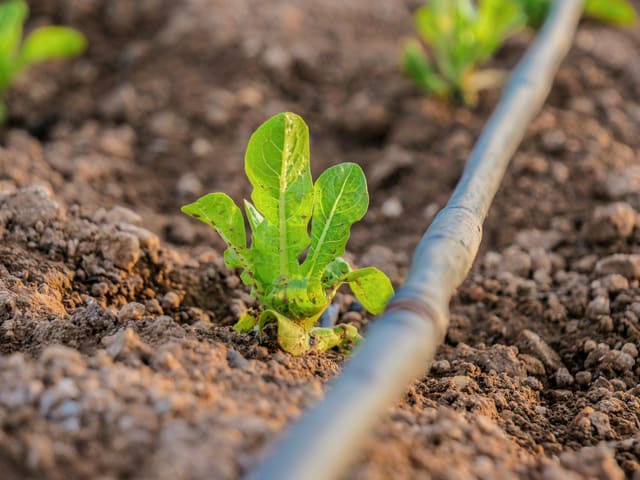
The old sprinklers matter too. In Henderson, spray irrigation may be used for lawn grass and nothing else, so the spray heads under new turf get capped. Trees and beds around it move to drip. Our irrigation page covers that changeover.
Living with it through the summer
The normal July high at Harry Reid International Airport is 104.5°F, and the valley hit 120°F on July 7, 2024. Sunlit turf runs much hotter than the air. A study by UNLV and the Desert Research Institute found green artificial turf peaking about 69°F above irrigated grass, with surface readings as high as 169°F, and the researchers traced that heat to sunlight more than to air temperature. In Penn State's tests, watering cooled turf for a short while: the surface was back above 120°F within 45 minutes after a light watering and about an hour and a quarter after a heavy one.
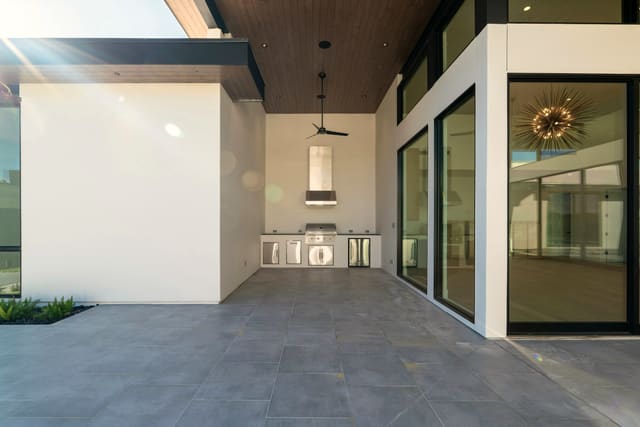
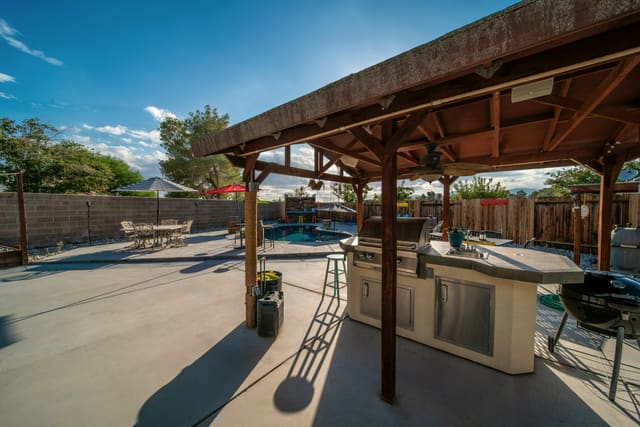
So we plan turf around shade and the hours you use the yard: under or beside a patio cover, near trees, and away from spots that sit in afternoon sun with nothing to break it. Our post on artificial turf in Las Vegas heat goes through the studies.
Rebates and your HOA
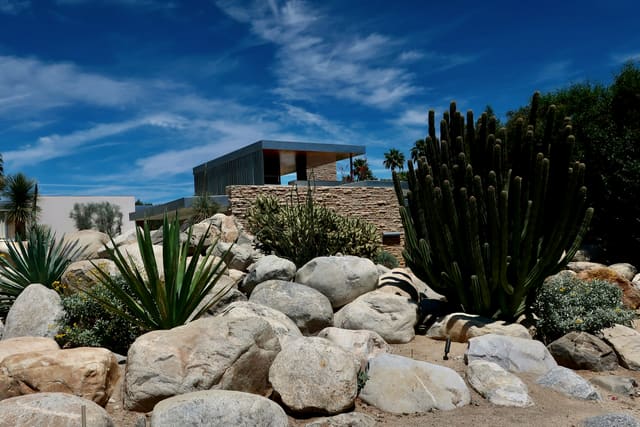
SNWA's Water Smart Landscapes rebate pays to replace a living lawn with desert landscaping. It accepts permeable artificial turf in place of rock or bark, but the converted area still needs at least 50 percent living plant cover at maturity and drip irrigation. A yard of wall-to-wall turf won't qualify. The lawn also has to stay alive until SNWA inspects it and approves the job. Our guide to the SNWA grass removal rebate has the full conditions.
Under NRS 116.330, an HOA can't prohibit drought-tolerant landscaping in a yard you use, and the statute names decorative rock and artificial turf as part of it. The board can still require your plans for architectural review and ask that the design fit the community, but it can't unreasonably refuse. Send the plans before work starts.
What changes the job, and what to have ready
The size of the area and how we reach it set most of the work: a narrow side gate means turf rolls and base rock go in by hand. A live lawn with roots and sprinkler pipe takes longer to clear than bare dirt or rock. Curves, seams, borders and stepping stones each add cutting time, and a low spot that holds water needs regrading before any base goes down.
Before we start, have your HOA approval in hand, show us the irrigation valves and clock, and tell us about any private lines in the yard. The utility marks its lines up to your meter; the Public Utilities Commission of Nevada says the homeowner is responsible for knowing where lines run from the meter to a barbecue or pool equipment. We've spent years fixing yards that inexperienced crews left behind, which is why the base and drainage get the time they need. We do the demo, base, turf, stepping stones and the beds around them as one contractor, and the estimate is free.
Sources
- Chapter 14.14 Conservation Henderson Municipal Code (Ord. 3905, 2022).
- Service Rules, Chapter 3 Las Vegas Valley Water District.
- Chapter 13.08 Water Conservation North Las Vegas Municipal Code (Ord. 3147, 2022).
- Choosing plants Southern Nevada Water Authority.
- NRS Chapter 455: underground facilities Nevada Legislature (2025 revision).
- Homeowner guide to safe digging Public Utilities Commission of Nevada.
- Temperature overview and highest maximum temperatures National Weather Service Las Vegas.
- Study finds artificial turf may be too hot for summer use UNLV, September 18, 2008.
- The effect of irrigation on synthetic turf characteristics Penn State Center for Sports Surface Research, 2015.
- Water Smart Landscapes rebate and residential program conditions Southern Nevada Water Authority.
- NRS 116.330: drought tolerant landscaping Nevada Legislature (2025 revision).


